Automatic Power Reduction Guide: Smarter Energy, Lower Bills
Automatic power reduction is quickly becoming one of the most important technologies in modern energy systems. Whether it’s used in data centers, telecom networks, or industrial machines, it helps reduce power usage without affecting performance.
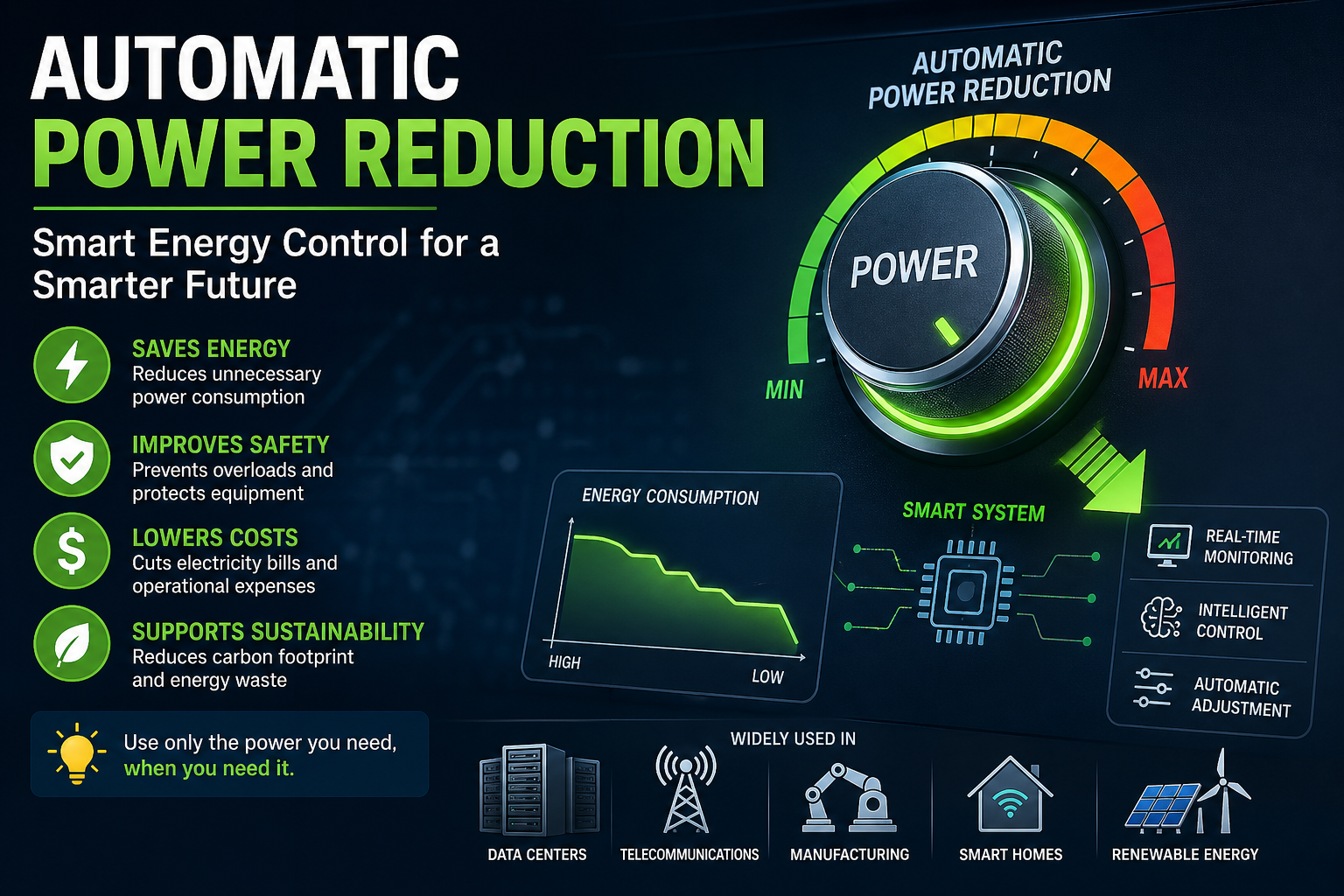
In simple terms, automatic power reduction adjusts energy consumption based on real-time demand. When full power is not needed, the system lowers output automatically. This saves energy, reduces costs, and protects equipment.
Today, businesses are under pressure to cut energy expenses and meet sustainability goals. That’s where automatic power reduction plays a major role. It ensures systems run efficiently while avoiding waste. If used correctly, it can significantly improve both performance and profitability.
How Automatic Power Reduction Works
Automatic power reduction works through a smart combination of sensors, software, and control systems. These components constantly monitor conditions like voltage, temperature, and workload.
When the system detects a drop in demand or an abnormal condition, it instantly reduces power output. This process happens within milliseconds and requires no human intervention.
For example, in a server environment, unused processors are automatically slowed down or turned off. In electrical systems, power is reduced during overloads to prevent damage.
This intelligent response keeps systems stable and efficient. It also ensures that energy is only used when necessary, which is critical in today’s high-demand environments.
Key Technologies Behind Automatic Power Reduction
Several advanced technologies make automatic power reduction possible. These tools work together to deliver real-time energy control and efficiency.
- Smart Sensors
Monitor system performance continuously - AI-Based Controllers
Predict and adjust power needs automatically - Load Management Systems
Distribute energy efficiently across devices - Circuit Protection Devices
Prevent overload and reduce power instantly - Energy Monitoring Software
Provides real-time insights and analytics
These technologies ensure that automatic power reduction is accurate, fast, and reliable in every situation.
Why Automatic Power Reduction Is Important Today
The demand for energy is increasing rapidly. At the same time, costs are rising, and environmental concerns are growing. This makes automatic power reduction more important than ever.
One of its biggest advantages is energy efficiency. By reducing unnecessary power usage, it helps lower electricity bills. This is especially important for businesses with large-scale operations.
Another key benefit is safety. Systems can automatically reduce power during faults or overheating, preventing damage and accidents.
It also improves system reliability. By managing power intelligently, it reduces stress on components, which increases their lifespan.
In short, automatic power reduction is not just a feature—it is a necessity for modern energy management.
Discover exclusive content from Trastel
Applications of Automatic Power Reduction Across Industries
Automatic power reduction is used in many industries to improve efficiency and performance.
- Data Centers
Reduce power usage during low traffic periods - Telecommunications
Adjust signal strength based on network demand - Manufacturing
Lower machine power during idle times - Smart Homes
Optimize appliance energy consumption - Renewable Energy Systems
Balance supply and demand automatically
These applications show how flexible and valuable this technology is across different sectors.
Automatic Power Reduction in Electrical Systems
In electrical systems, automatic power reduction plays a critical role in maintaining stability and safety. It works alongside circuit breakers, relays, and monitoring devices to control power flow.
When an overload or fault occurs, the system quickly reduces or cuts off power. This prevents damage to equipment and avoids dangerous situations.
Another important function is load balancing. During peak demand, non-essential loads are reduced to ensure critical systems continue operating smoothly.
This not only improves efficiency but also reduces downtime. As a result, businesses can maintain productivity while keeping energy costs under control.
Overall, automatic power reduction makes electrical systems smarter, safer, and more reliable.
Role of Automatic Power Reduction in Networking Systems
In networking systems, automatic power reduction is essential for both performance and energy efficiency. Modern networks must handle large amounts of data while minimizing energy use.
For example, wireless routers can adjust their signal strength based on the distance of connected devices. This reduces unnecessary power usage and improves connection quality.
In optical networks, power is reduced automatically when a connection is lost. This ensures safety and prevents signal interference.
These systems are designed to adapt in real time, which makes them highly efficient. As networks continue to grow, automatic power reduction will play an even bigger role in managing energy consumption.
Real-World Case Study: Data Center Energy Savings
A global data center implemented this is to improve efficiency. The system monitored server activity and adjusted power levels based on demand.
During peak hours, all servers operated at full capacity. However, during low-traffic periods, unused servers were automatically powered down or switched to energy-saving modes.
The results were impressive. The data center reduced its energy consumption by nearly 30%. It also lowered cooling costs and extended the lifespan of its equipment.
This case study proves that this is not just theory. It delivers real, measurable benefits when applied correctly.
Top Benefits of Automatic Power Reduction
This offers several powerful advantages that make it essential for modern systems.
- Energy Savings
Reduces unnecessary power consumption - Lower Costs
Cuts electricity bills significantly - Improved Safety
Prevents overloads and system failures - Longer Equipment Life
Reduces wear and tear on components - Better Performance
Ensures systems run efficiently - Environmental Benefits
Lowers carbon footprint and energy waste
These benefits make this a smart investment for any organization.
Future Trends in Automatic Power Reduction Technology
The future of this is closely linked with advancements in AI and smart technologies. Systems are becoming more intelligent and capable of predicting energy needs before they occur.
Artificial intelligence can analyze usage patterns and adjust power levels automatically. This leads to even greater efficiency and cost savings.
Another major trend is integration with smart grids and renewable energy systems. This helps balance energy supply and demand, especially with solar and wind power.
As technology continues to evolve, this system will become more advanced, more efficient, and more widely adopted across industries.
FAQs
- What is automatic power reduction?
It is a system that automatically reduces energy usage based on demand or system conditions. - How does automatic power reduction save energy?
It lowers power output when full capacity is not needed, reducing waste. - Where is automatic power reduction used?
It is used in data centers, electrical systems, networks, and smart devices. - Is automatic power reduction safe?
Yes, it improves safety by preventing overloads and equipment damage. - Can automatic power reduction reduce costs?
Yes, it significantly lowers electricity bills and maintenance expenses.
Conclusion
This is transforming how we use and manage energy. It helps systems become smarter, safer, and more efficient.
By reducing unnecessary power usage, it cuts costs and supports sustainability goals. It also improves system reliability and extends equipment life.
As industries continue to evolve, This will become even more important. Businesses that adopt it early will gain a strong advantage in efficiency and performance.
In a world focused on saving energy and reducing costs, This is not just an option—it is the future.