Transmate: Smart Logistics Software Guide 2026
Managing logistics today is harder than ever. Rising fuel costs, delayed shipments, and lack of real-time visibility are common problems businesses face. This is where Transmate is changing the game.
Transmate is a cloud-based transport management system designed to simplify logistics operations. It helps businesses plan shipments, manage carriers, and control costs—all in one place. Instead of relying on spreadsheets and manual processes, companies can automate their entire workflow.
In 2026, speed and efficiency define success. Businesses that adopt smart logistics tools like Transmate gain a clear advantage. This guide explains everything you need to know, from features to real-world impact.
What Is Transmate and How Does It Work
Transmate is a modern logistics platform that connects shippers, carriers, and logistics teams in a single system. It acts as a central hub where all transportation activities are managed.
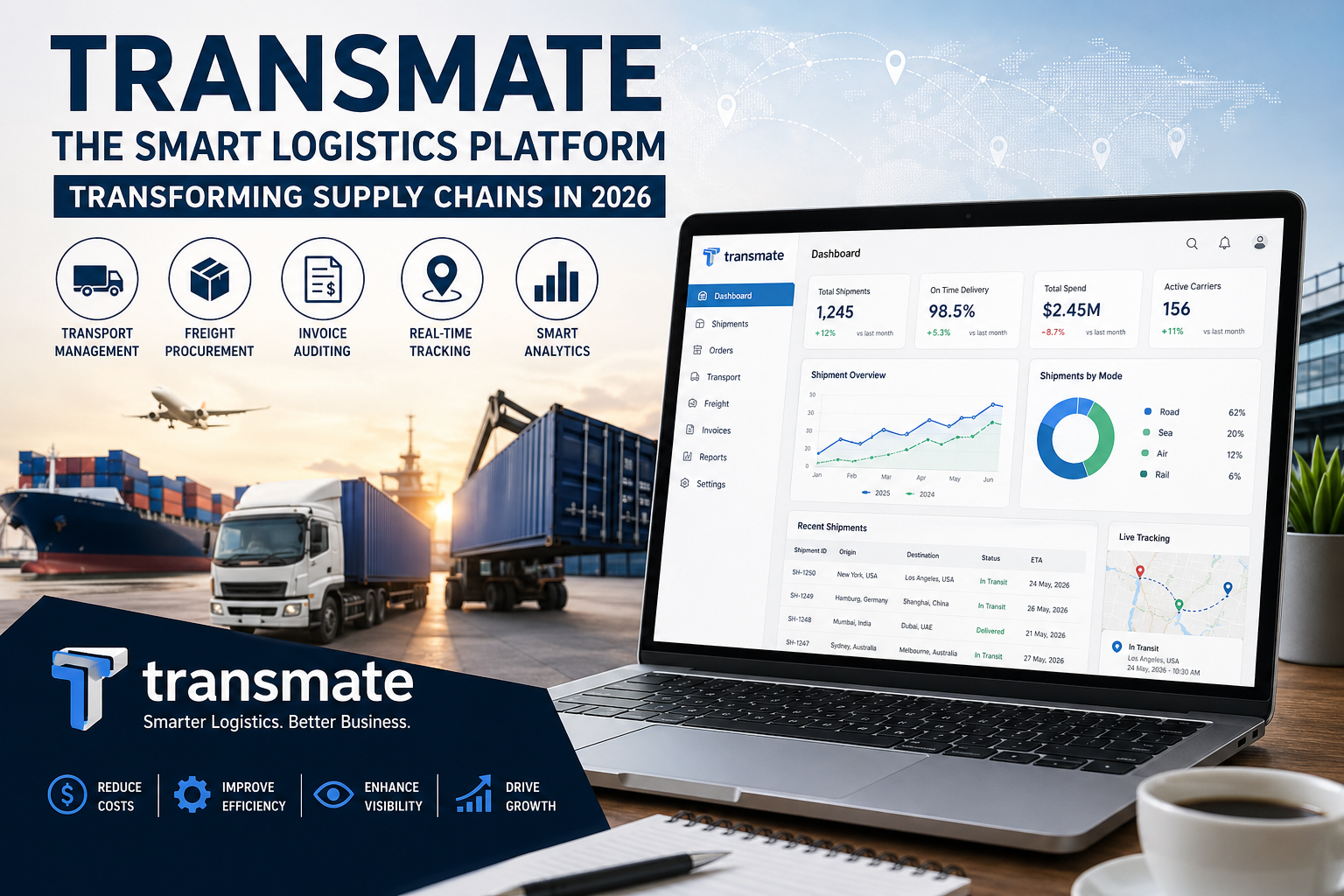
The platform works by digitizing the entire logistics process. Users can plan shipments, assign carriers, track deliveries, and verify invoices without switching between tools. Everything is stored in one dashboard.
Transmate also integrates with existing ERP systems. This allows companies to sync data and avoid duplication. The system uses automation to reduce manual tasks, saving both time and effort.
With real-time data and insights, businesses can make faster decisions. This improves efficiency and reduces operational risks.
Core Features of Transmate Platform
Transmate offers a wide range of features that simplify logistics management:
- Transport planning and execution tools
- Carrier selection and rate management
- Automated freight tendering
- Invoice auditing and cost verification
- Real-time shipment tracking and reporting
These features allow businesses to control every part of their logistics process. For example, companies can store carrier rates and automatically choose the most cost-effective option.
The platform also supports multiple transport modes, including road, air, and sea. This makes it suitable for both local and international operations.
Why Businesses Are Switching to Transmate in 2026
The logistics industry is rapidly evolving. Companies are under pressure to deliver faster while keeping costs low. Traditional systems can’t keep up with these demands.
Transmate provides a solution by offering automation, visibility, and control. Businesses no longer need separate tools for different tasks. Everything is managed in one place.
Another reason for its growing popularity is cost efficiency. By analyzing data, companies can identify waste and optimize routes. This leads to significant savings.
In 2026, digital transformation is no longer optional. Businesses that fail to adapt risk falling behind. Transmate helps companies stay competitive in a fast-changing market.
Key Benefits of Using Transmate
Using Transmate brings several important advantages:
- Better visibility across the supply chain
- Reduced manual work and human errors
- Improved cost control and budgeting
- Faster and smarter decision-making
- Stronger collaboration between teams
One of the biggest benefits is transparency. Businesses can track shipments in real time and quickly respond to delays.
Another key advantage is scalability. Whether a company handles 10 shipments or 10,000, Transmate can easily adapt to its needs.
Discover exclusive content from Trastel
Transmate vs Traditional Logistics Systems
Traditional logistics systems are often slow and inefficient. They rely heavily on manual processes and disconnected tools.
Transmate replaces these outdated methods with a unified platform. Users can manage everything from a single interface, reducing complexity.
Automation is another major difference. Tasks that once required hours can now be completed in minutes. This increases productivity and reduces errors.
Real-time insights also set Transmate apart. Businesses can monitor performance and make adjustments instantly, something older systems struggle to provide.
Real Case Study: Cost Reduction and Efficiency Gains
A manufacturing company faced rising logistics costs and frequent delays. Their process relied on spreadsheets and manual coordination.
After implementing Transmate, they centralized their operations. Shipment planning became faster, and carrier selection was automated.
Within six months, the company reduced transportation costs by 15%. Delivery times improved, and customer satisfaction increased.
Invoice auditing also helped eliminate billing errors. The company gained full control over its logistics expenses.
This real-world example highlights the practical impact of Transmate on business performance.
Pricing and Flexibility of Transmate
Transmate offers a flexible pricing model. Businesses can choose the features they need instead of paying for a full package.
This makes it accessible for companies of all sizes. Small businesses can start with basic tools, while larger organizations can use advanced features.
The platform is also easy to integrate. It works with existing systems, reducing the need for major changes.
This flexibility makes Transmate a practical solution for businesses looking to upgrade their logistics operations without disruption.
Challenges and Limitations of Transmate
While Transmate offers many benefits, it also has some limitations.
New users may need time to learn the platform. Although it is user-friendly, advanced features require training.
Some businesses may also need additional integrations for complex operations. This can increase setup time.
Reporting features, while useful, may require customization for detailed analysis.
Despite these challenges, most users find the platform highly effective and worth the investment.
Future Trends: The Evolution of Transmate
The future of logistics is driven by technology. Transmate is expected to evolve with trends like artificial intelligence and automation.
Predictive analytics will play a bigger role. Businesses will be able to forecast demand and optimize routes more accurately.
Integration with IoT devices will improve tracking. Companies will have real-time updates with higher precision.
Sustainability is another key trend. Transmate may introduce tools to measure and reduce carbon emissions.
As logistics continues to evolve, platforms like Transmate will become even more important.
FAQs
1. What is Transmate used for?
Transmate is used to manage logistics operations, including shipment planning, carrier selection, and cost control.
2. Is Transmate suitable for small businesses?
Yes, its flexible pricing allows small businesses to start with basic features and scale over time.
3. Does Transmate offer real-time tracking?
Yes, it provides real-time shipment tracking and detailed reporting for better visibility.
4. Can Transmate integrate with other systems?
Yes, it can integrate with ERP systems and other logistics tools easily.
5. What industries use Transmate?
Manufacturing, retail, and logistics companies commonly use Transmate to manage supply chains.
Conclusion
Transmate has become a powerful solution for modern logistics challenges. It combines planning, execution, and cost control into one platform.
Businesses using Transmate gain better visibility, reduce costs, and improve efficiency. Its automation features save time and reduce errors.
While there are some limitations, the overall benefits make it a strong investment. In a competitive market, smart tools like Transmate are essential.
If your business wants to stay ahead in 2026, adopting Transmate could be the right move.