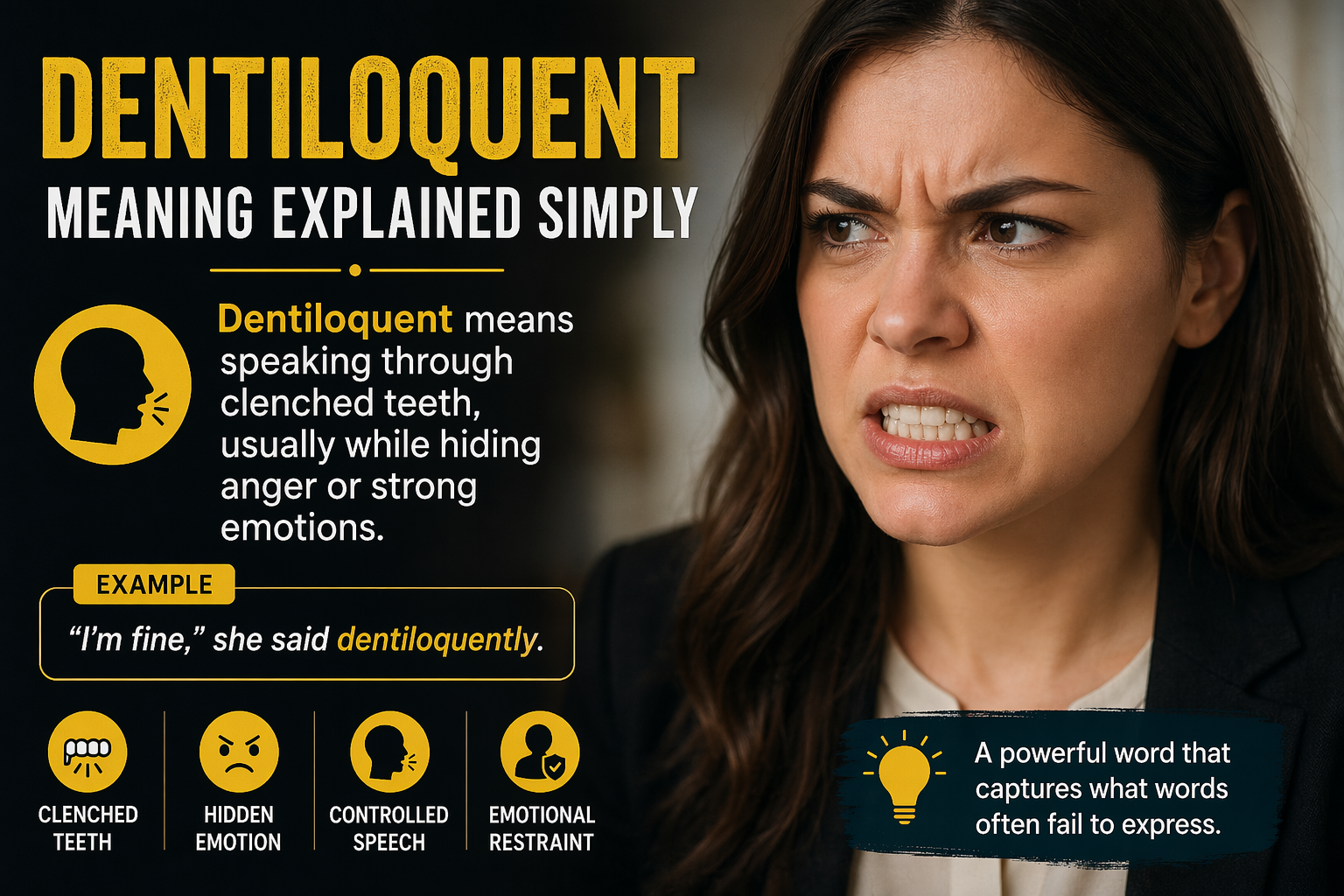
Dentiloquent Meaning: Powerful Truth + Real Examples
The word dentiloquent describes speaking through clenched teeth, usually while hiding strong emotions like anger or frustration. It’s not just about speech. It’s about controlled emotion and hidden tension.
In today’s world, where people often suppress feelings to stay professional or polite, dentiloquent behavior is more common than ever. Let’s break it down in a simple and practical way.
What Does Dentiloquent Mean in Simple Words?
Dentiloquent means speaking while your teeth are tightly clenched. But the meaning goes deeper than just physical action.
It reflects a moment when someone is:
- Trying to stay calm
- Holding back anger
- Controlling emotions
For example:
“I understand,” he said dentiloquently.
Even though the sentence sounds calm, the tone suggests frustration. That’s the power of this word—it shows what’s hidden beneath the surface.
This is why dentiloquent is such a useful word. It combines body language and emotion in a single term. Instead of long explanations, one word explains everything.
Why Dentiloquent Is Becoming Popular Today
Modern life demands emotional control. Whether at work, school, or online, people are expected to stay calm—even when they feel upset.
This creates more situations where dentiloquent speech appears.
Think about:
- Office meetings
- Customer service conversations
- Online arguments
- Family discussions
In all these cases, people often hide their true feelings. They speak politely, but their tone reveals tension.
That’s why the word dentiloquent is gaining attention. It perfectly describes a very common behavior in today’s world.
Dentiloquent vs Normal Speech: Key Differences
Not all speech is the same. Dentiloquent speech has a unique emotional layer.
Here’s how it differs:
- Normal speech is relaxed and natural
- Dentiloquent speech is tight and controlled
- Normal speech shows open emotion
- Dentiloquent speech hides emotion
When someone speaks dentiloquently, you can feel something is off. The words may sound polite, but the tone tells another story.
This difference is important in communication. It helps you understand what people truly feel.
Discover exclusive content from Trastel
Real-Life Situations Where Dentiloquent Happens
Dentiloquent behavior is everywhere. You just need to notice it.
Common situations include:
- During workplace conflicts
- While dealing with difficult customers
- In tense family arguments
- When responding to criticism
- While hiding irritation in public
In all these moments, people try to stay composed. But their tone and body language reveal hidden emotions.
This is why dentiloquent communication feels tense. It’s controlled, but not completely neutral.
The Psychology Behind Dentiloquent Behavior
Dentiloquent speech is strongly linked to emotional control.
From a psychological point of view, it shows:
- Self-discipline
- Social awareness
- Emotional suppression
Sometimes, this is a good thing. It helps avoid conflict and maintain professionalism.
However, if someone is always dentiloquent, it may mean they are not expressing emotions properly. Over time, this can lead to stress or misunderstandings.
Understanding this behavior helps improve communication. It allows you to read between the lines and respond better.
How Dentiloquent Improves Writing and Storytelling
Writers love words that create strong images. Dentiloquent is one of them.
Instead of writing long descriptions, a writer can use one word to show emotion.
Example:
“She answered dentiloquently.”
This instantly tells the reader:
- She is angry
- She is controlling herself
- There is tension
This makes storytelling more powerful and engaging.
Using dentiloquent correctly can make characters feel real and relatable. It adds depth without adding extra words.
Real Case Study: Dentiloquent in Workplace Communication
Let’s look at a real-world example.
A manager was frustrated because a project was delayed. During the meeting, he said:
“Let’s not repeat this mistake.”
His tone was calm, but his jaw was tight. His words were controlled, but the frustration was obvious.
This is dentiloquent communication.
What happened next?
- The team understood the seriousness
- No one felt attacked
- The message was clear
This shows how dentiloquent speech can balance emotion and professionalism.
Common Mistakes When Using Dentiloquent
Many people misunderstand how to use this word.
Avoid these mistakes:
- Using it for normal speech
- Ignoring emotional context
- Overusing it in writing
- Using it without tension
Dentil oquent should only be used when there is clear emotional restraint.
If there is no tension, the word loses its meaning.
How to Use Dentiloquent Correctly (Simple Guide)
To use dentiloquent properly, follow these tips:
- Use it in emotional situations
- Combine it with dialogue
- Focus on tone and body language
Examples:
- “He replied dentil oquently during the argument.”
- “Her denti loquent tone revealed hidden anger.”
Keep it simple and natural. The word works best when it fits the situation.
FAQs
- What does dentiloquent mean in English?
It means speaking through clenched teeth while hiding emotions like anger or frustration. - Is dentiloquent a common word?
No, it is rare but becoming more popular due to its precise meaning. - Can dentiloquent be used in daily conversation?
Yes, but it is more commonly used in writing and formal contexts. - Does dentiloquent always mean anger?
Not always. It can also show tension, frustration, or emotional control. - Why is dentiloquent useful in writing?
It helps describe complex emotions quickly and clearly with a single word.
Conclusion
Dentiloquent is more than just a rare word. It describes a real human behavior—speaking while hiding emotion.
In today’s world, where people often control their feelings, this word is more relevant than ever.
Learning dentil oquent helps you:
- Understand people better
- Improve communication
- Write more effectively
Next time you notice someone speaking politely but sounding tense, you’ll recognize it instantly. That’s dentil oquent behavior in action.